Schools and universities are among the busiest public buildings. Between class changes, lunch breaks, sporting activities, and daily deliveries, thousands of students and staff move through the same corridors, classrooms, stairwells, and common areas every day. In a large educational facility serving up to 10,000 students daily, walls can face constant contact from backpacks, desks, chairs, cleaning equipment, carts, and everyday foot traffic.
So, what is the best wall protection for schools and universities? The most effective solution is a combination of impact-resistant wall panels, corner guards, wall guards, crash rails, and kickplates. Each product protects a different part of the building, helping reduce surface damage, simplify maintenance, and keep educational spaces looking presentable over time.
For school administrators, architects, contractors, and facility managers, choosing the right school wall protection system is not simply a matter of appearance. It is a practical investment in building maintenance, safety, and long-term operating costs.
Why Do Schools Need Heavy-Duty Wall Protection?
Educational buildings experience a different type of wear and tear from ordinary commercial interiors. A school corridor may look relatively quiet during a lesson, but it can become extremely busy within minutes when hundreds of students move between classrooms.
Common causes of wall damage in schools include:
- Backpacks and personal belongings: Students frequently brush against walls, particularly in narrow hallways and crowded locker areas.
- Desks and chairs: Furniture movement can cause repeated scratches, dents, and scuff marks in classrooms and libraries.
- Sports equipment: Balls, equipment carts, and gym accessories can impact walls in sports halls and changing areas.
- Cleaning and maintenance carts: Janitorial equipment and supply trolleys can damage lower wall sections and exposed corners.
- High-frequency pedestrian traffic: Continuous contact gradually wears down painted surfaces, especially around doors, corridors, and entrances.
Without suitable protection, facility teams may need to repaint walls, repair damaged corners, or replace worn sections more frequently. These repairs can also interfere with school activities and require additional maintenance labor.
A properly selected educational wall protection system helps protect vulnerable surfaces before damage becomes a recurring maintenance issue.
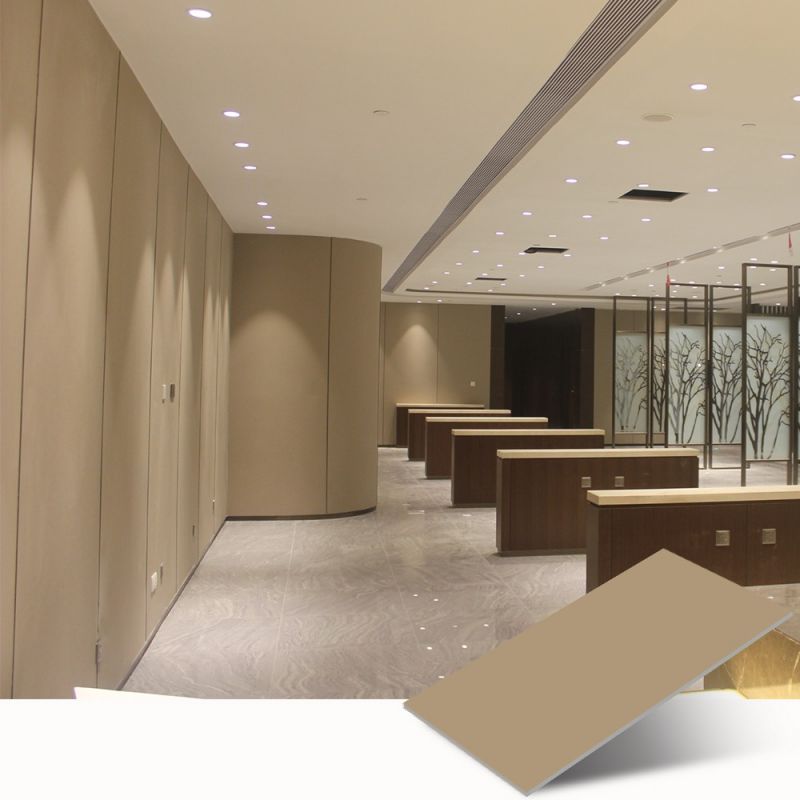
The Most Vulnerable Areas in Schools and Universities
Not every wall in an educational building needs the same level of protection. The best approach is to identify high-contact areas and select products according to their actual use.
School corridors and main hallways
Corridors are among the most demanding environments. Students move in groups, carry bags, and pass through the same spaces several times a day. Wall guards and crash rails can help absorb everyday impacts from people, furniture, and equipment. Wall panels are also useful where larger wall surfaces need protection.
Classrooms and lecture rooms
Classrooms experience frequent furniture movement. Chair backs, desk edges, and storage units can gradually damage painted walls. Rigid vinyl wall panels or protective sheets can provide a durable, easy-to-clean surface in areas exposed to repeated contact.
Stairwells and corridor corners
Outside corners are particularly vulnerable because they receive impacts from furniture, carts, and passing equipment. Installing corner guards at exposed edges helps reduce chipping and damage to wall finishes.
Libraries and computer laboratories
These spaces require a balance between durability and appearance. Decorative wall protection panels can protect frequently used areas while maintaining a clean interior design suitable for quiet learning environments.
Sports halls and changing rooms
Sports facilities often experience stronger impacts from equipment and regular physical activity. Higher-impact wall guards and protective wall sheets are worth considering in these locations.
For educational projects, Pinger offers a dedicated Educational Space Wall Protection collection, providing a starting point for selecting protection products for different school environments.
Which Wall Protection Products Work Best for Educational Buildings?
A complete school wall protection system usually combines several product types rather than relying on one material throughout the building.
Rigid Vinyl Wall Protection Panels
Rigid vinyl wall panels are suitable for corridors, classrooms, libraries, and other interior areas where larger wall surfaces need protection. They help resist everyday impacts, scratches, and stains while offering a range of colors and decorative finishes.
Pinger's rigid sheet wall protection products are available in thicknesses from 1mm to 3mm, with standard sheet sizes of 1.22m × 2.44m and 1.22m × 2.8m for solid colors. Wooden-color options are also available in standard dimensions.
These panels can be considered for projects where facility managers want a consistent protective surface across multiple rooms and corridors.
Explore Pinger rigid sheet wall protection panels for more information about panel specifications, available finishes, and installation options.
Wall Guards and Crash Rails
Wall guards and crash rails are designed for areas where repeated impacts are more likely. They are especially useful along busy corridors, near classroom entrances, and in service areas where carts or movable equipment are frequently used.
Pinger's wall guard systems use aluminum retainers and rigid vinyl covers, with an internal bumper designed to absorb impact. Different heights are available to suit different wall conditions and protection requirements.
For example, a 76mm crash rail may be considered for targeted protection, while taller wall guard profiles can cover a larger contact area. The correct height depends on the equipment, traffic patterns, and expected impact locations.
View the Wall Guards and Crash Rail System to compare different protective profiles.
Corner Guards
Wall corners are often the first areas to show visible damage in busy educational facilities. Corner guards provide a protective layer around exposed edges, helping reduce damage from backpacks, furniture, cleaning carts, and other everyday contact.
Pinger offers vinyl corner guards in different wing widths, including 20mm, 40mm, 51mm, 61mm, and 76mm options across its product range. The selection should be based on corner geometry, expected impact exposure, and the required appearance.
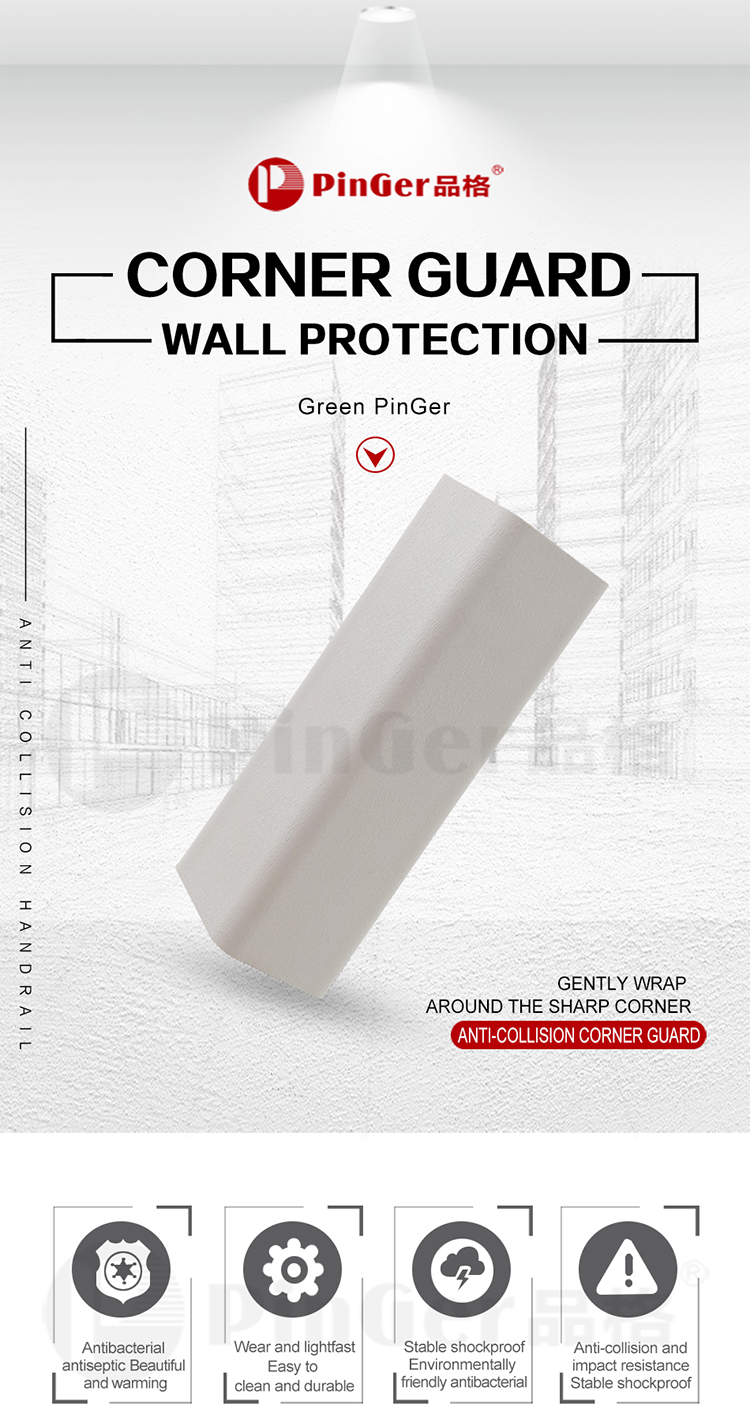
For additional product details, see Pinger Corner Guards System.
Protective Handrails
In university buildings, student residences, and multi-level school facilities, handrails can serve both functional and protective purposes. Suitable wall-mounted handrails provide support for users while helping protect corridor walls from repeated contact.
When selecting a handrail, consider its grip design, mounting height, material, accessibility requirements, and compatibility with the building's interior finishes.
Door and Wall Kickplates
Lower wall sections and door surfaces are easily damaged by shoes, bags, equipment, and cleaning tools. Kickplates are a practical option for entrances, classroom doors, storage rooms, and service areas where repeated contact is concentrated near floor level.
Combining these products creates a more complete approach to university wall protection, covering both large wall surfaces and the smaller areas that are most likely to suffer damage.
How to Choose the Right Wall Protection for Different School Areas
One of the most common mistakes in educational building projects is specifying the same protection product for every location. A classroom, sports hall, and main corridor have different requirements.
The following table provides a practical starting point for architects, contractors, and school facility managers.
| School Area | Recommended Protection | Main Purpose |
|---|---|---|
| Main corridors | Wall guards, crash rails, wall panels | Reduce repeated impact and surface wear |
| Classrooms | Rigid vinyl wall panels, chair rails | Protect walls from desks and chairs |
| Stairwells | Corner guards, handrails | Protect exposed edges and support movement |
| Libraries | Decorative wall panels | Combine wall protection with interior appearance |
| Sports halls | Impact-resistant wall panels and wall guards | Manage contact from sports equipment |
| Entrances and doorways | Corner guards and kickplates | Protect edges and lower surfaces |
| Student common areas | Wall panels and crash rails | Handle frequent daily contact |
This area-based approach also helps control project costs. Instead of installing heavy-duty protection everywhere, project teams can prioritize locations with the highest exposure to impact and wear.
What Specifications Should Buyers Check Before Ordering?
For large school and university projects, product selection should be based on documented specifications rather than appearance alone. Before approving a wall protection system, buyers should review the following details.
Material and thickness
Check whether the product is made from rigid vinyl, flexible vinyl, PETG, aluminum, or a combination of materials. For rigid wall panels, Pinger provides thickness options ranging from 1mm to 3mm. The appropriate specification depends on the intended application and impact exposure.
Fire performance
Fire performance is an important consideration in educational buildings, especially in corridors and public circulation areas. Check the applicable fire-testing standard and the actual product test documentation. Pinger lists Class A fire and smoke performance for certain products under ASTM E84. Buyers should confirm that the selected model has the required documentation and meets local building codes.
Cleaning and hygiene
Schools need surfaces that can be cleaned regularly without complicated maintenance. Look for smooth or appropriately textured finishes, stain resistance, and compatibility with the cleaning chemicals used by the facility's maintenance team.
Color and surface finish
Wall protection does not have to look industrial. Solid colors and wood-grain finishes can be coordinated with classroom interiors, school branding, and existing architectural materials.
Installation and accessories
Confirm the installation method, fixing requirements, trims, end caps, corner details, and adhesive compatibility. A complete specification should cover the entire installation rather than only the main panel or rail.
Compliance documentation
Request product-specific test reports, technical data sheets, and relevant certifications. Requirements vary across the United States, the United Kingdom, and European markets, so local regulations should always take priority.
How to Calculate Wall Protection Requirements for a School with 10,000 Students
A large student population does not automatically mean that every wall requires full coverage. A more useful approach is to estimate the areas exposed to repeated contact.
For example, a project team can begin with the following planning steps:
- Map high-traffic routes: Identify main corridors, classroom entrances, cafeteria connections, and stairwell approaches.
- Measure exposed wall sections: Record the length and height of walls that need protection.
- Identify impact points: Mark corners, door edges, furniture zones, and locations where carts or equipment move regularly.
- Select suitable products: Assign wall panels, wall guards, crash rails, and corner guards according to the exposure level.
- Calculate quantities: Estimate panel coverage, rail lengths, corner guard quantities, and installation accessories.
- Allow for installation details: Account for cutting, joints, openings, corners, and project-specific wastage.
Here is a simplified example of how a facility team might estimate material quantities:
| Planning Item | Illustrative Quantity |
|---|---|
| Corridor wall sections | 200 linear meters |
| Protected wall height | 1.2 meters |
| Estimated wall panel coverage | 240 square meters |
| Planning allowance for cutting | 5% (example only) |
| Estimated order area | 252 square meters |
The calculation is based on 200m × 1.2m = 240m², plus an illustrative 5% allowance. Actual quantities should be confirmed through site measurements and the final installation drawings. The 10,000-student figure is a project scenario, not a product performance rating.
This kind of early calculation makes it easier for procurement teams to compare quotations, control material budgets, and avoid unnecessary orders.
Why Easy-Clean and Durable Surfaces Matter in Education
Maintenance is a major consideration for schools because cleaning teams often work within limited time windows. Corridors, classrooms, and shared facilities must be cleaned regularly without disrupting lessons or campus operations.
Wall protection products with stain-resistant, easy-to-clean surfaces can help simplify routine maintenance. Pinger's vinyl wall protection range is designed with features including impact resistance, wear resistance, and surface-cleaning convenience. Selected product materials also offer antibacterial and mold-resistance properties supported by product-specific testing.
For educational facilities, buyers should distinguish between general easy-clean performance and verified antibacterial performance. If antibacterial protection is part of the project specification, request the relevant test report and confirm which product model it covers.
Long-term maintenance planning should also consider the availability of replacement parts, matching colors, trims, and installation accessories. These details are particularly important for universities and school districts managing multiple buildings.
Why Work with an Experienced Wall Protection Manufacturer?
For contractors, distributors, architects, and institutional buyers, choosing the right manufacturer is just as important as selecting the right product.
An experienced wall protection manufacturer should be able to provide more than a product catalog. Buyers need technical specifications, material options, installation guidance, consistent product quality, and support during project planning.
PinGer, operated by Guangzhou Pinger Vinyl Material Co., Ltd., was founded in 1999 and specializes in vinyl wall panels and wall protection systems. Its product range covers rigid wall protection sheets, wall guards, corner guards, handrails, and other interior protection solutions.
For school and university projects, this product range makes it possible to coordinate different protection components within one overall specification. Buyers can also discuss colors, finishes, dimensions, and product combinations according to their project requirements.
Whether the project involves a kindergarten, a university campus, a sports facility, or a large public education building, the goal is the same: protect vulnerable interior surfaces while maintaining a practical and attractive learning environment.
To discuss product specifications or project requirements, visit Pinger's official wall protection website or contact its team for a suitable product recommendation.
Frequently Asked Questions About School Wall Protection
What is the best wall protection for schools?
The best solution depends on the area. Rigid vinyl wall panels are suitable for larger wall surfaces, crash rails protect high-contact corridor areas, and corner guards help prevent damage to exposed edges. A combination of these products generally provides more complete coverage.
How do you protect school corridors from daily student traffic?
Use wall guards or crash rails along frequently used corridors, rigid wall panels where larger surfaces are exposed, and corner guards at vulnerable intersections. Product placement should be based on actual traffic patterns and impact points.
What thickness should school wall protection panels be?
Pinger offers rigid wall protection panels in thicknesses from 1mm to 3mm. The right thickness depends on the substrate, expected impact exposure, installation conditions, and project specifications. Buyers should consult the technical data for the selected model.
Are vinyl wall protection panels easy to clean?
Many vinyl wall protection surfaces are designed for routine cleaning and stain resistance. However, cleaning products should be checked against the manufacturer's maintenance instructions to avoid damaging the finish.
Can wall protection be customized to match school interiors?
Yes. Pinger offers different solid colors and wood-grain finishes, with customization options available for selected products. Buyers should confirm available finishes, dimensions, and minimum order requirements before placing an order.
Does school wall protection need to meet fire safety requirements?
Yes. Wall protection products used in educational buildings should meet the applicable local fire and building regulations. Request product-specific fire test reports, such as ASTM E84 documentation where relevant, rather than relying on general material claims.
How much wall protection does a school with 10,000 students need?
There is no fixed quantity based on student population alone. The required amount depends on corridor lengths, wall heights, room layouts, traffic density, and the locations of vulnerable corners and doors. A site survey and measured layout are the best ways to calculate quantities.
Can wall protection be installed in existing schools?
Yes. Many wall protection products can be installed as part of renovation or maintenance projects. The existing wall substrate, surface condition, installation method, and available working space should be checked before installation.