Custom Aluminum Extrusions vs Standard Aluminum Extrusions Which Is More Cost-Effective?

When you compare cost-effectiveness, standard aluminum extrusions usually offer lower upfront costs for simple, high-volume projects. Custom Aluminum Extrusions become more valuable when your design needs are unique or you aim to reduce waste and machining. You can look to Guang Ya aluminium, a trusted aluminum extrusion manufacturer, for both options. Their advanced manufacturing capabilities help optimize material use and achieve economies of scale. Always weigh initial expenses against long-term performance and savings for your project.

  • Guang Ya’s efficient production reduces costs for both custom and standard profiles.

  • Custom designs can minimize waste, improving resource efficiency over time.


Key Takeaways

  • Standard aluminum extrusions are cost-effective for simple designs and high-volume orders, offering lower upfront costs.

  • Custom aluminum extrusions provide unique shapes and features, reducing waste and improving efficiency for specialized applications.

  • Order volume significantly impacts pricing; larger orders lower the per-unit cost, making bulk purchases more economical.

  • Lead times vary; standard extrusions are quicker to obtain, while custom options require more time for tooling and production.

  • Consulting with your supplier early can help optimize your design and reduce costs, ensuring the best fit for your project.


Cost Comparison: Custom Aluminum Extrusions vs Standard

Upfront Costs and Tooling

When you start a project, you need to consider the initial investment for tooling. Standard aluminum extrusions usually have little or no tooling cost because the dies already exist. Custom aluminum extrusions require new dies, which adds to the upfront cost. The price depends on the size and complexity of the profile you need. Here is a table that shows typical tooling costs in the industry:

Profile Type

Cost Range (USD)

Small solid profiles

300–600

Medium hollow or complex profiles

800–1,500

Large or multi-cavity dies

2,000–3,500

Special shapes (with mandrel + bridge)

up to 5,000 or more

If you need a solid profile die, you might pay around $1,250. Hollow dies can reach $1,950, and complex or multi-hollow dies can go up to $5,000. These costs are one-time fees, but they can affect your budget, especially for small orders. Guang Ya aluminium uses advanced equipment to create both standard and custom aluminum profiles efficiently, which helps control extrusion cost and keeps projects on track.

Tip: If your design matches an existing aluminum extrusion profile, you can avoid tooling fees and speed up your project.


Per-Unit Pricing and Volume

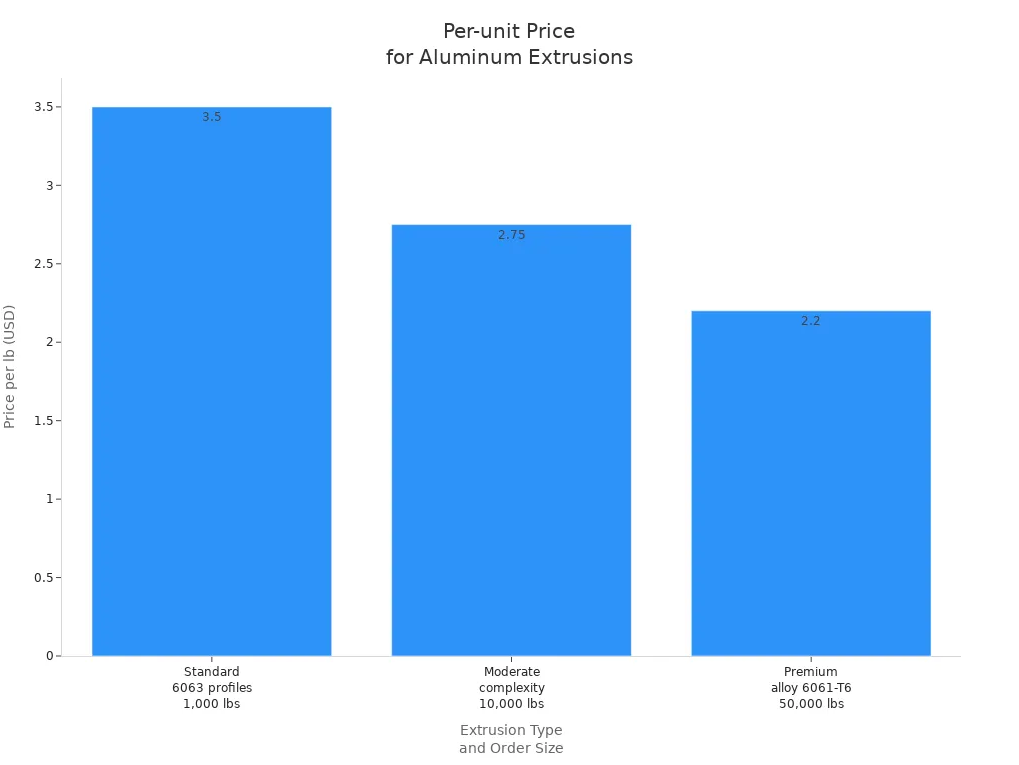
The price you pay for each piece depends on the type of extrusion and how many units you order. Standard aluminum extrusions cost less per unit because they use existing dies and benefit from mass production. Custom aluminum extrusions have higher per-unit prices at low volumes, but the cost drops as you increase your order size. The following table shows typical price ranges:

Type of Extrusion

Price Range (USD) per kg

Price Range (USD) per lb

Order Size (lbs)

Approx. Price per lb

Standard 6063 profiles

$2.50–$3.80

$2.00–$4.50

1,000

$3.50

Moderate complexity profiles

$3.50–$5.00

N/A

10,000

$2.75

Premium alloy 6061-T6

$4.00–$6.00

N/A

50,000

$2.20

Order volume plays a big role in reducing per-unit cost. When you order more, you spread fixed costs over more units. Suppliers like Guang Ya aluminium can optimize production for large batches, which means you get better pricing. Bulk orders also lower shipping and material costs. For example, a small order of 500 meters will have a higher baseline cost, but a large order of 5,000 meters can reduce the per-meter price by 10–30%. You can often get discounts if you commit to larger or repeat orders.


Lead Times and Availability

Lead time is the period from placing your order to receiving your extrusions. Standard aluminum extrusions are usually available faster because the dies are ready and inventory is often in stock. Custom aluminum extrusions take longer because the manufacturer needs to design and produce new dies before starting production. Here is a comparison of average lead times:

Type of Extrusion

Lead Time

Custom (simple, low volume)

4 to 8 weeks

Custom (complex, high volume)

10 to 14 weeks or more

Standard

Shorter than custom

Guang Ya aluminium stands out as an aluminum extrusion manufacturer with large-scale production. Their 70 extrusion lines and advanced scheduling help reduce lead times for both custom and standard profiles. You can expect reliable delivery, even during busy seasons, because their automated systems keep production moving smoothly.

Note: If you need aluminum extrusions quickly, standard profiles are the best choice. For unique designs, plan for extra time to allow for tooling and production.


Cost Drivers for Aluminum Extrusions

Design Complexity

You will see that design complexity plays a major role in the economics of an extrusion. When you choose custom aluminum extrusions, you gain the ability to create complex shapes that standard profiles cannot match. This approach reduces the need for extra machining and secondary operations. You save time and material, which improves efficiency for your project. Custom designs allow you to add features like channels, grooves, or mounting points directly into the profile. This means you can meet unique applications with fewer steps. You also support sustainability by minimizing waste. Guang Ya aluminium offers advanced production lines that handle both simple and intricate aluminum extrusion profiles, giving you flexibility for any project.

Tip: Custom extrusions let you achieve shapes that traditional methods cannot, which is ideal for specialized applications.


Order Volume

Order volume affects the economics of an extrusion in several ways. Large orders help spread out the cost of dies and setup, making each part less expensive. Small orders may have higher costs per unit, especially for custom aluminum extrusions. Guang Ya aluminium can handle both small and large batches, so you can match your order size to your project needs. If you plan to use the same profile for multiple applications, you can benefit from bulk pricing and faster production. High-volume orders also allow for better scheduling and resource use, which leads to cost savings.


Application Requirements

Your application requirements will shape the final cost and design of your extrusion. You need to consider factors like wall thickness, cross-section size, and alloy selection. The table below shows how these requirements impact cost and performance:

Application Requirement

Description

Wall Thickness

Choose the right thickness for strength and quality.

Overall Cross Section Size

Keep sizes within 1-10 inches for economical extrusions.

Weight-per-Foot

Balance weight for efficient press operation.

Shape Constraints

Avoid extreme ratios and keep walls balanced for better results.

Alloy Selection

Pick alloys based on the mechanical needs of your applications, such as 6063 or 6061.

You will find that different applications, such as architectural systems, solar energy, or aerospace, require specific profiles and finishes. Guang Ya aluminium supports a wide range of applications with its custom aluminum profiles and standard options. Their flexibility ensures you get the right solution for your project, whether you need high strength, corrosion resistance, or special shapes. You can rely on their expertise as an aluminum extrusion manufacturer to guide you through the selection process.


When Standard Aluminum Extrusions Are More Cost-Effective


Simple Designs

You will find that standard aluminum extrusions work best for projects with straightforward shapes. If your design does not need special features, you can choose from a wide range of off-the-shelf aluminum extrusion profiles. This option saves you time and money because you avoid custom die costs. Many industries use standard profiles for frames, supports, and enclosures.

Here is a table that shows why standard extrusions are a smart choice for simple designs:

Feature

Benefit

Good corrosion resistance

Withstands outdoor and marine environments

Excellent thermal conductivity

Ideal for heat sinks and electrical parts

Wide alloy selection

Meets needs for strength and machinability

Easy to process and install

Reduces labor costs and installation time

Low cost and fast delivery

No mold fees and quick supply

You can follow these tips for the best results:

  1. Keep the shape symmetrical.

  2. Maintain uniform wall thickness.

  3. Use smooth transitions with generous radii.

Standard aluminum extrusions from Guang Ya aluminium offer strong design flexibility and eco-friendly options. You can rely on their expertise as an aluminum extrusion manufacturer for both standard and custom aluminum profiles.


High-Volume Orders

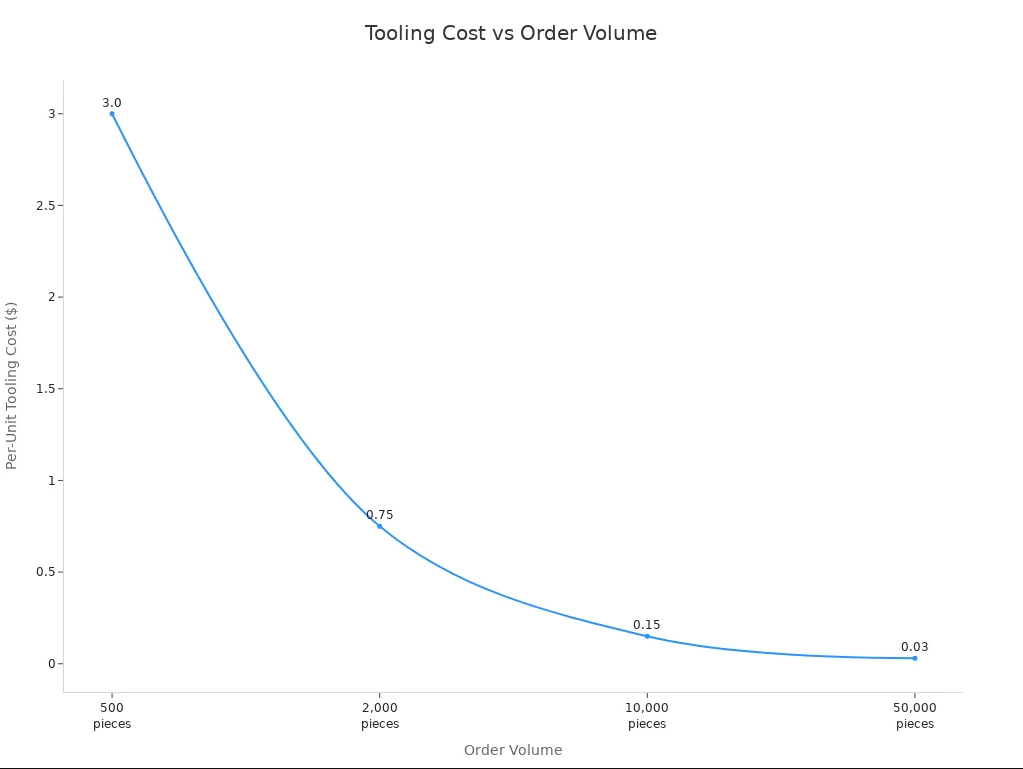
When you need thousands of pieces, standard aluminum extrusions become even more cost-effective. Large orders spread the tooling cost over many units, which lowers the price per part. You can see this effect in the table below:

Order Volume

Per-Unit Tooling Cost

500 pieces

$3.00

2,000 pieces

$0.75

10,000 pieces

$0.15

50,000 pieces

$0.03

You benefit from economies of scale. Guang Ya aluminium can handle large production runs efficiently, which means you get consistent quality and fast turnaround.


Immediate Availability

If you need aluminum extrusion profiles quickly, standard options are your best bet. These profiles are often in stock and ready to ship. You can start your project without waiting for custom dies or long production times.

Type of Profile

Availability Timeline

Standard Profiles

7 to 14 days

Custom Profiles

15 to 30 days

You save valuable time and reduce project delays. Standard aluminum extrusions from Guang Ya aluminium help you meet tight deadlines and keep your workflow smooth.

Tip: Choose standard profiles when you need fast delivery, simple shapes, or large quantities. You will get the best value and reliable performance from a trusted aluminum extrusion manufacturer.


When Custom Aluminum Extrusions Offer Better Value


Unique Performance Needs

You may find that custom aluminum extrusions deliver the best results when your project demands unique performance characteristics. These profiles allow you to design features that standard aluminum extrusions cannot provide. For example, you can add slots, channels, or complex shapes that improve integration and functionality. Custom aluminum extrusions help you achieve tighter tolerances, which is essential for applications where precision and performance matter most. You can optimize strength-to-weight ratios and meet specific load-bearing requirements. This approach supports industries such as aerospace, automotive, and medical devices, where advanced performance is critical.

Unique Performance Needs

Description

Unique Functionality is Required

Custom profiles can include specific features, slots, or shapes for better integration.

Performance Optimization is Critical

Tailored shapes can enhance strength-to-weight ratios and meet specific load-bearing needs.

Aesthetics and Branding Matter

Custom designs contribute to a distinctive product identity, enhancing market appeal.

Complex and custom-engineered aluminum extrusion profiles use advanced tooling to solve unique design challenges, integrating features essential for high-performance applications.


Reducing Waste and Machining

Custom aluminum extrusions help you minimize waste and reduce machining costs. The extrusion process creates parts that closely match your final dimensions, so you use only the material you need. This reduces scrap and lowers disposal fees. You can also consolidate multiple features into a single profile, which decreases the number of parts and assembly time. Unlike CNC machining, which removes material and creates waste, custom aluminum extrusions optimize material usage and improve overall performance.

  • You save on labor costs by reducing assembly steps.

  • You lower material costs by minimizing scrap.

  • You improve performance by designing profiles that fit your application perfectly.


Long-Term Savings

You gain long-term savings with custom aluminum extrusions. These profiles reduce assembly time by 30–50%, which means you spend less on labor. Higher dimensional accuracy leads to less rework and fewer errors. You can modify custom profiles easily, making future changes less expensive. Many custom aluminum extrusions can be disassembled and reused, which adds value over time. When you choose a trusted aluminum extrusion manufacturer like Guang Ya aluminium, you ensure consistent quality and reliable performance for your project.

Aspect

Custom Aluminum Extrusions

Standard Profiles

Labor Savings

Assembly time reduced by 30-50%

Longer assembly time due to welding

Reduced Rework

Higher dimensional accuracy, less rework

Potential heat distortion, more rework

Adaptability

Easy modifications, less costly

Difficult and costly modifications

Reusability

Can be disassembled and repurposed

Often scrapped after use

Tip: Custom aluminum extrusions from Guang Ya aluminium can help you achieve the highest level of performance and value for specialized projects.


Choosing Aluminum Extrusions for Your Project


Assessing Needs

You should start by evaluating your project’s specific requirements before selecting aluminum profiles. Consider the following factors to guide your decision:

  • Project size and complexity

  • Design flexibility

  • Supplier capabilities

  • Cost-effectiveness

  • Lead times

You need to decide if your application calls for custom aluminum extrusions or if standard aluminum extrusions will meet your needs. Custom aluminum profiles work well for unique shapes or specialized functions. Standard aluminum extrusions offer fast delivery and lower upfront costs. Guang Ya aluminium provides both options, ensuring you can match your project’s demands with the right aluminum profiles.


Total Cost of Ownership

When you compare options, look beyond the initial price of aluminum profiles. Total cost of ownership includes several elements:

  • Upfront costs

  • Design flexibility

  • Project needs

  • Engineering support

  • Sustainability

  • Logistical reliability

You may find that custom aluminum profiles reduce waste and machining, saving money over time. Standard aluminum extrusions can lower costs for simple, high-volume projects. Consider how each choice affects installation, maintenance, and long-term performance. Guang Ya aluminium, as a leading aluminum extrusion manufacturer, helps you evaluate these factors to maximize value.


Supplier Consultation

Consulting with your supplier early in the process leads to better results. When you share clear specifications for your aluminum profiles, you help the supplier recommend the best solutions. Suppliers like Guang Ya aluminium often suggest design improvements that enhance manufacturability and reduce costs. You benefit from their experience with both custom aluminum extrusions and standard aluminum extrusions. Early collaboration uncovers efficiency opportunities and ensures your aluminum extrusion profiles meet all technical and logistical needs.

Tip: Reach out to your aluminum extrusion manufacturer as soon as you define your project goals. Their expertise can help you avoid costly mistakes and achieve the best outcome for your aluminum profiles.


You need to choose the right profile for your project by weighing cost and performance.

  • Standard profiles usually cost less and work well for simple needs.

  • Custom profiles give you flexibility and let you add features, but you pay more at first.

  • Custom profiles help you optimize manufacturing and fit unique applications.

Guang Ya aluminium offers both custom and standard profile solutions. You can see their range in the table below:

Type of Solution

Description

Custom profile

Tailored to your drawing and needs

Standard profile

Wide selection for many uses

Surface treatments

Many finishes for your profile

Deep processing

Ready-to-install profile with extra machining


To get the best value, follow these steps:

  1. Gather your profile drawings and details.

  2. Decide how many profile pieces you need.

  3. Pick your profile finish and alloy.

  4. Compare profile quotes from trusted suppliers.

Always look at both the upfront price and the long-term value of your profile. Talk with your supplier to make sure your profile fits your project.


FAQ

What is the difference between custom aluminum extrusions and standard aluminum extrusions?

Custom aluminum extrusions match your unique design needs. Standard aluminum extrusions use common shapes and sizes. You choose custom aluminum profiles for special features. Standard profiles work well for simple projects.


When should you choose custom aluminum profiles over standard options?

You select custom aluminum profiles when your project requires unique shapes, tight tolerances, or special performance. Standard aluminum extrusion profiles suit basic designs and fast delivery. Guang Ya aluminium helps you decide based on your application.


How does order volume affect the cost of aluminum extrusion profiles?

You lower the per-unit cost by increasing your order volume. Large orders spread tooling and setup costs. Aluminum extrusion manufacturers like Guang Ya aluminium offer better pricing for bulk orders.


Can you get fast delivery with custom aluminum extrusions?

Custom aluminum extrusions need new tooling, so lead times are longer. Standard aluminum extrusions ship faster because they are often in stock. Guang Ya aluminium uses advanced production to reduce wait times for both options.


What industries use custom aluminum extrusions?

You find custom aluminum extrusions in aerospace, automotive, medical devices, and solar energy. These industries need specialized aluminum extrusion profiles for performance and efficiency. Guang Ya aluminium supplies profiles for many applications.
 

What Information Should You Provide When Requesting a Custom Aluminum Extrusion Quote?

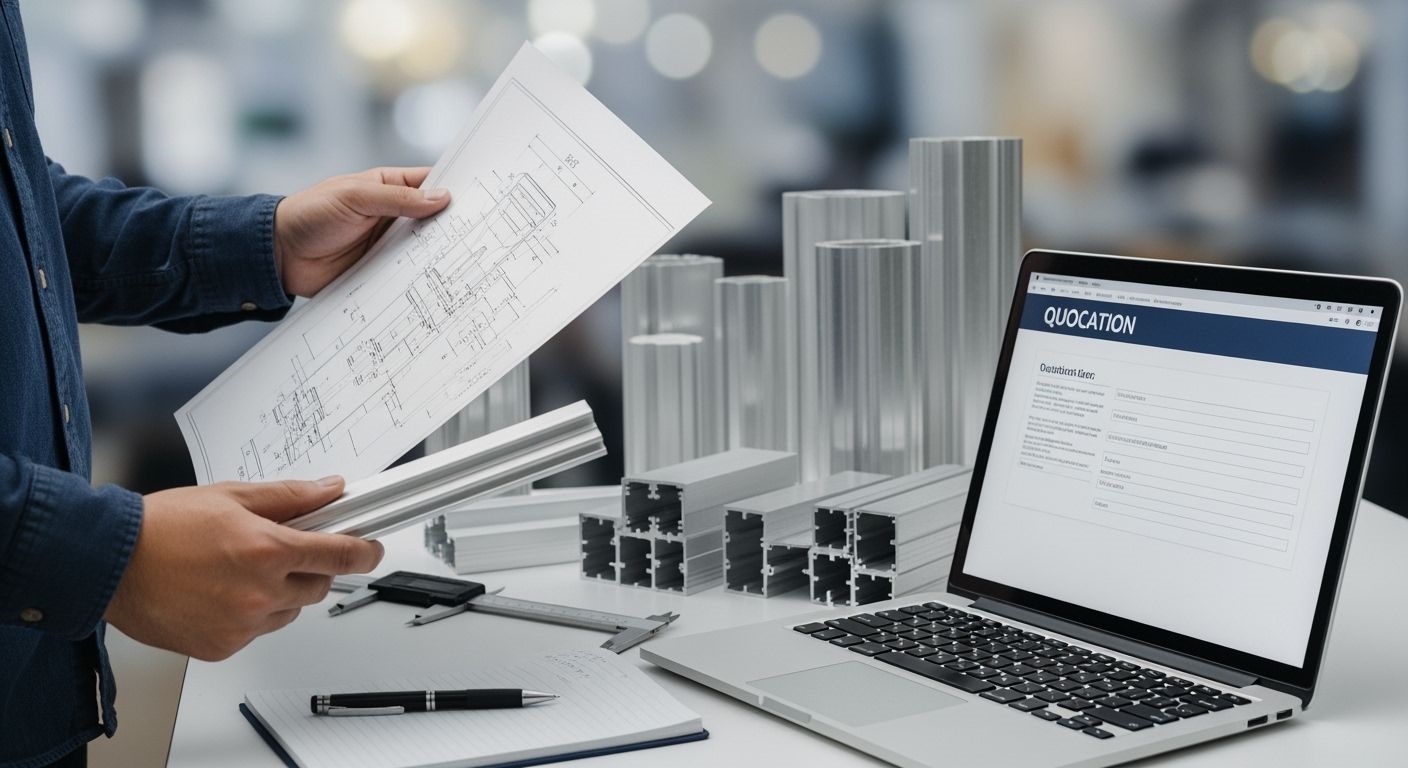
You need to give all important information when you ask for a quote for a custom aluminum extrusion. This helps you get the right price and stops delays. The price of custom extrusions changes because of many things, like your full design and what you want. Important details are:

  • Correct drawings and the last version of your drawing

  • What alloy, temper, and surface finish you want

  • Important sizes and how exact they must be

  • How long each piece should be and how many you need

  • How the part should look

  • How you want it packed and how fast you need it

  • What file types you can send

If you leave out information, it can make your quote take longer or give you the wrong price. If you have questions about aluminum extrusion design or need help with a special aluminum part, Guang Ya Aluminium can look at your drawings and help you with the details.


Key Takeaways

  • Give clear and correct drawings to stop mistakes and help the factory know your design.

  • Say which alloy and temper you want, because these change how the part works and its price.

  • List all surface finishes you need and show which sides should look nice for the best look.

  • Clearly tell the cut lengths and how many you need so the supplier can plan making them and set the right price.

  • Use the right file types for your drawings so everyone can talk easily and get the right quote.


Drawings and Dimensions for Custom Aluminum Extrusions

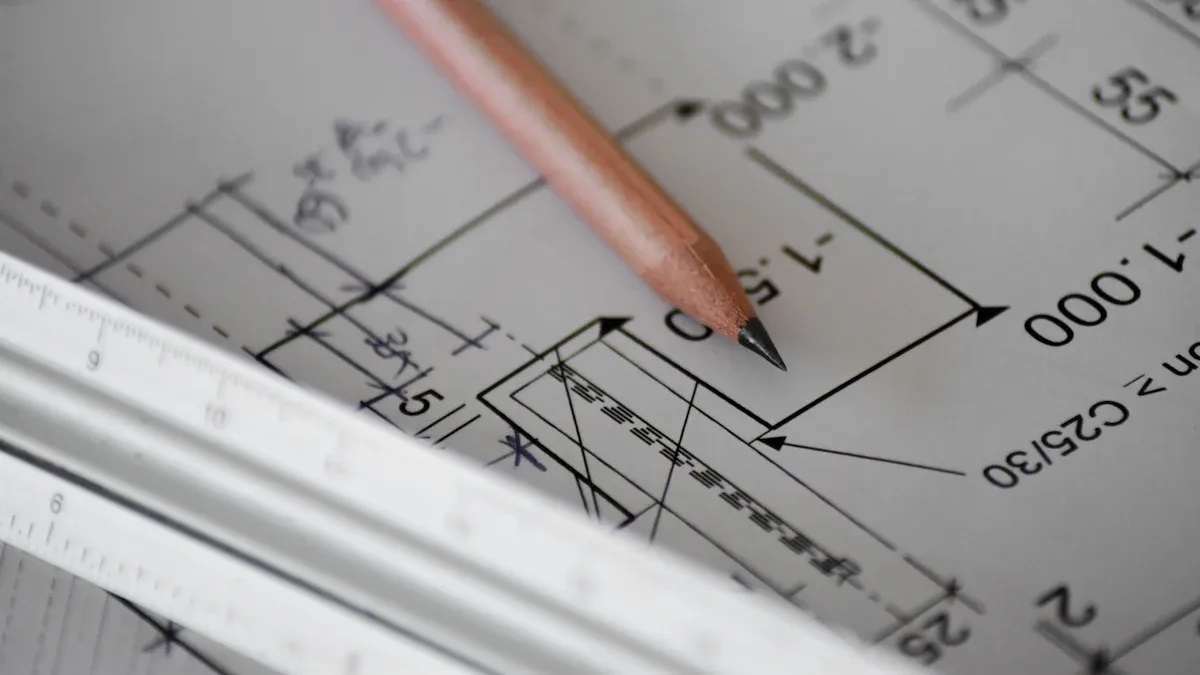
When you ask for a quote, you need to give clear drawings. You also need to share exact details about your design. Good drawings help the factory know what you want. This stops mistakes from happening. Always send the newest version of your design. This helps you get the right price. It also makes sure your part will work.


Required Drawing Details

Your technical drawings should have some important things:

  • Show all main sizes and how close they must be.

  • List which aluminum extrusion alloys and finishes you want.

  • Add notes if you want to make building easier, like ways to use fewer steps.

  • Show the full size and shape of each part.

  • Pick the alloy and temper early in your plan.

These details help the factory check your needs. They also help them plan for good quality. If you need help, Guang Ya Aluminium can look at your drawings and give tips.


Specifying Dimensions and Tolerances

You must show all sizes and how close they must be on your drawings. This helps the factory keep good quality and find problems early. Careful checks at every step make sure your parts are good. They also make sure your parts work as you want. You should always use the rules that factories follow when you set how close sizes must be. Here are some common rules:

Standard

Description

ANSI H35.2

This is the main rule for sizes and how close they must be for aluminum mill products in the U.S. It gives exact sizes and limits.

ASTM B221

This rule is for aluminum and aluminum-alloy extruded products. It makes sure the material fits the size rules.

Aluminum Standards and Data (ASD)

This book puts size tables, alloy rules, and design tips in one place for engineers.

When you give all the details, you help the factory make your part in the best way. This saves time and money. If you have questions or need help with your RFQ, Guang Ya Aluminium can help you.


Alloy and Temper Selection

When you ask for a quote, you must pick the right alloy and temper. These choices change how your part works, how much it costs, and how easy it is to make. You should always tell the factory this in your rfq. This stops confusion and keeps things moving fast.


Choosing the Right Alloy

There are many alloys you can pick for custom aluminum extrusions. Each one has its own good points and best uses. Here is a table to help you see some popular choices:

Alloy

Tensile Strength

Strengths

Weaknesses

Applications

2024

455 – 483 MPa

Great strength, good formability

Poor corrosion resistance, poor weldability

Aircraft parts, gears, pistons

5052

193 – 290 MPa

Great formability, great corrosion resistance

Poor machinability

Marine equipment, appliances, tubes

6061

241 – 310 MPa

Great weldability, good machinability, good corrosion resistance

Average formability

Building products, automotive parts, furniture

You need to match the alloy to your project. For example, 6061 is strong and easy to weld. It works well for building and car parts. If you want better corrosion resistance, 5052 is a good pick.


Specifying Temper

Temper tells the factory how the alloy was treated. This gives the part special properties. Picking the right temper is just as important as picking the alloy. Some tempers, like T6, make the part strong. But T6 can crack if you bend it after extrusion. T5 is used for architectural parts. It gives a good balance of cost and strength.

Alloy/Temper

Yield Strength (psi)

Cost Implication

Complexity of Extrusion

6061-T6

35,000

Higher

Limited

6005-T5

37,700

Lower

More complex

When you send your rfq, always:

  • Say the alloy and temper you want.

  • Tell the product form, like tube or plate.

  • Give all sizes and tolerances.

  • List any standards or certificates you need.

Tip: Do not use hardness values instead of temper names. Always check that the alloy and temper you want exist.

Picking the right alloy and temper helps you get the best custom aluminum extrusion.


Surface Finish Requirements

When you ask for a quote, you must say what surface finish you want. The finish changes how your part looks. It also changes how long your part lasts. The finish can change the price too. Always tell the supplier which finish you want. Also say which surfaces will be seen.


Finish Options for Custom Aluminum Extrusions

There are many finish choices for custom aluminum extrusions. Each finish makes the part look different. Each finish gives a different level of protection. Some finishes are better for outside use. Others are good for inside parts. Here are some common finishes:

Finish Type

Visual Effect

Protection Level

Typical Application

Mill Finish

Dull, gray, tool marks

Low

Hidden parts, internal structures

Anodized

Matte, metallic sheen

Medium–High

Window frames, solar frames, facades

Powder Coat

Smooth, solid color

High

Railings, signs, building components

Brushed

Linear grain, matte

Medium

Trims, fixtures, display panels

Polished

Reflective, shiny

Low–Medium

Decorative or indoor visible parts

Painted

Glossy or custom tones

Medium

Custom branding or color themes

Think about where you will use your part. Outdoor parts need more protection. Anodizing or powder coating works best for these. If you want a certain color or shine, powder coating and painting are good choices. Some finishes, like PVDF liquid coating, cost more. These last longer in tough places.

Tip: Not every finish works with every alloy. Ask your supplier if you do not know which finish fits your alloy.


Cosmetic and Exposed Surfaces

You must show which surfaces need a cosmetic finish. Mark these spots on your drawings. If you want a special look, like a color or shine, write this in your request. For anodized parts, list the class and color. For powder-coated parts, give the color, shine, and any standards you need.

  • Move junction lines away from faces that must look perfect. This helps stop marks from showing.

  • Write down any special finish, like wood-look or brushed, so the supplier knows what you want.

  • Remember, finer finishes cost more and may take longer to make. For example, anodizing and powder coating can cost $1,200 to $1,400 per metric ton. Special finishes may cost even more.

Picking the right finish for your custom aluminum extrusion helps you get the look and performance you want. Giving clear details in your quote request saves time and stops mistakes.


Cut Lengths and Order Quantities

Specifying Cut Lengths

You must tell the supplier the exact cut length you want. This helps the factory pick the right tools and machines. Most people ask for pieces between 25 and 50 feet long. You can ask for shorter or longer pieces if needed. Always check your drawings to make sure the cut length is correct.

  • Write the cut length clearly on your drawing.

  • Tell the supplier if you need special length tolerances.

  • Ask about the best way to pack and ship your pieces.

If you use custom aluminum profiles for buildings or machines, you must give the right cut length. This helps the factory avoid mistakes and waste.


Indicating Quantities and Lead Times

You must tell the supplier how many pieces you need. The total number changes the price and how fast your order is made. Bigger orders help lower the cost for each meter. Suppliers can run machines better and get cheaper raw materials. You also save on shipping when you order more.

Factor

Impact of Order Quantity

Fixed Costs

Spread over more meters, so each meter costs less.

Production Efficiencies

Machines work better with big batches, so yield is higher.

Raw Material Procurement

Buying in bulk gets better prices from suppliers.

Shipping Costs

Full containers cost less per unit than small loads.

Supplier Negotiations

Big orders can mean discounts and better deals.

You should also tell the supplier when you need your order. Lead time depends on a few things:

Factor

Description

Tooling Status

If tooling already exists, lead time is much shorter.

Plant Workload

If the plant is busy, it may take longer to schedule your order.

Order Size

Bigger orders might take more time to finish and process.

Finish Requirements

Extra finishing steps can add more time to your order.

Material Availability

If raw materials are late, production can be delayed.

Customer-side Delays

If you change your design or approve late, lead time gets longer.

Tip: Give your delivery date when you ask for a quote. This helps the supplier plan and gives you a better timeline.

If you need extruded aluminum profiles for a big job, plan your order early. Clear details about cut lengths, quantities, and lead times help you get the best results.


Special Requirements for Custom Aluminum Extrusions

Packaging and Shipping Needs

You should tell the supplier how to pack and ship your custom aluminum extrusion. Clear instructions keep your parts safe while they travel. There are different ways to pack parts. Each way works best for certain needs. Here is a table with some common choices:

Packaging Style

Typical Use Case

Advantage

Strapped bundle

Long straight extrusions, large orders

Easy to handle, saves space

Cardboard wrap + guards

Small orders, high-finish or powder-coated

Surface protection

Wooden crate / pallet

Heavy, bulky, or mixed extrusion orders

Strong, stable for transit

Plastic sleeve or film

Corrosion-prone or long storage orders

Keeps out dust and moisture

You can ask for special packaging if your parts need extra care. For example, you might want cardboard wraps for shiny parts. Heavy custom aluminum profiles may need wooden crates. If you want samples or need artwork checked, tell the supplier. These requests can make your order take longer.

Special packaging and shipping requests can change your quote and how things are made. The table below shows how different things can affect lead time and planning:

Factor

Impact on Lead Time and Production

Clear Specifications

Helps avoid delays and ensures accurate quotes

Artwork Approval

Affects schedule due to checks needed before production

Packaging Samples

Adds extra lead time for confirmation

Complex Packaging Types

Require more planning and review time

Special Finishes

Increase planning time due to additional requirements

MOQ and Order Quantity

Affect material planning and production queue

Reorders

Can be faster if previous specifications are confirmed

Tip: Always give all packaging and shipping details when you ask for a quote. This helps the supplier plan and keeps your custom aluminum extrusions safe.


End Use and Application Details

You should tell the supplier how you will use your custom aluminum extrusion. This helps them know what you need and suggest the best choices. If you want extra work done on your parts, list these services:

  • Custom drilling

  • Punching

  • Countersinking

  • Cutting to length

  • Miter cutting

  • Bending or forming

Tell the supplier what your part will be used for. Here are some common uses for custom aluminum profiles:

  • Balustrades

  • Building and construction trim and framing pieces

  • Electrical components

  • Door and window frames

  • Furniture

  • Irrigation tubing

  • Marine applications

  • Piping

  • Railings

  • Recreation equipment

  • Sign frames

  • Storage tanks

  • Trailers

  • Truck frames

Adding services like anodizing, powder coating, assembly, or kitting can make your product better. These services make your custom aluminum extrusions stronger and easier to use. If you share how you will use your part, the supplier can give better advice and help you avoid mistakes.

Note: Special requests for packaging, shipping, or finishing can change your quote and how long your order takes. Clear communication helps you get the right custom aluminum extrusion for your project.


File Formats and Supporting Documents

When you ask for a quote, you must send your drawings in the right file type. This helps the supplier see your design without confusion. Using the correct file type makes it easier for engineers to check your project. It also helps them give you the right price.


Accepted Drawing File Types

Most aluminum extrusion suppliers use a few common file types. You should check with your supplier first, but these are the most popular:

  • .DXF

  • AutoCAD .DWG

  • Solid Works .STP

These file types let the factory look at your design closely. If you use another program, try to save your drawing as one of these types. Always send the newest version of your drawing so mistakes do not happen.

Tip: If you can, attach both a 3D model and a 2D drawing. This helps the supplier see your custom aluminum extrusions from every angle.


Additional Documentation

You should send more than just your drawing when you ask for a quote. Extra documents help the supplier understand what you need. This also makes the process faster. Here is a checklist to help you:

  1. Send your drawing or CAD file, like a STEP model and a PDF with sizes.

  2. Write down the alloy and temper you want.

  3. Tell your finish needs, like anodizing or powder coating.

  4. Show tolerances and mark important sizes.

  5. Say how many pieces you want or give different quantity choices.

  6. List any extra steps, like drilling or bending.

  7. Confirm how you want your parts packed.

  8. Write any inspection or certificate needs.

  9. Tell when you need your order and where it should go.

Complete documents help the supplier give you a quote faster and more correctly. When you send all the needed information, you avoid delays and mistakes. If you leave out details, the supplier may need to ask you more questions. This can make your project take longer.


Tips for a Complete Request for Quote

Submission Checklist

You can get a quote faster if you use a checklist. This makes sure you do not forget anything important. The table below shows what you need to include:

Checklist Item

Description

Dimensioned print

Add all important sizes and tolerances

Aluminum alloy & temper

Tell what material you want

Cut length(s)

Write the lengths you need for your parts

Cosmetically important surfaces

Point out surfaces that need to look good

Electronic file

Send files like igs, dxf, or dwg

Fabrication print

Add any details about how to make the part

Anodize/chem film/powder coat

Say if you need special surface treatments

Number of parts

Tell how many pieces you want

Packaging requirements

Write down any special packing needs

End use

Say what you will use the part for

Check off each item before you send your request. This helps the supplier know what you want for your custom aluminum extrusion and custom aluminum profiles. You will get answers faster and your quote will be more correct.


Common Mistakes to Avoid

People sometimes make mistakes when they ask for custom aluminum extrusion quotes. You can stop these problems by checking your papers and plans. Here are some mistakes people make:

  • If you leave out important sizes or tolerances, production can be late.

  • If you use unclear tolerance notes, there may be problems during checks.

  • If your profiles are too heavy, the cost goes up and they do not work as well.

  • If you do not think about die feasibility, your design may not be possible.

Tip: Look over your drawings and notes carefully. Make sure you know what extruded aluminum profiles can do and how they are made.

You can stop delays and extra costs by getting your papers ready and checking your plans. Talking clearly with the supplier helps you get the best results for your project.


You can get your custom aluminum extrusion quote faster if you give all the needed details. Use the checklist so you do not miss any steps, like drawings or surface finishing. When you talk clearly with the manufacturer, you get the results you want and do not have to redo your design. If you have questions, you can ask Guang Ya Aluminium for help. Giving all the right information helps you work well with your supplier and makes your project a success.

Required Information

Purpose

Drawings and CAD files

Accurate tooling and manufacturability

Alloy and finishing needs

Quality and compliance

Production volumes and timeline

Efficient planning and scheduling


FAQ

What information helps you get an accurate quote for custom aluminum profiles?

You should send clear drawings and exact sizes. Tell the supplier which alloy and temper you want. Say what surface finish you need. Write down the cut lengths and how many pieces you want. Also, tell them how you want your parts packed. This helps the supplier know your project and give the right price.

Can you request special finishes for extruded aluminum profiles?

Yes, you can ask for finishes like anodizing, powder coating, or painting. You should say what finish you want and the color. Tell which surfaces need to look good. This helps the supplier give you what you need.

Which file formats should you use for submitting drawings?

You should use .DXF, .DWG, or .STP files. These file types let the supplier check your drawings easily. Always send the newest version of your drawing.

How do order quantities affect your quote?

If you order more pieces, the price for each one is lower. Suppliers can plan better and buy materials in big amounts. You should tell the supplier how many pieces you need.

What if you need help with your design?

You can ask Guang Ya Aluminium for help. They look at your drawings and help you pick the best choices for your custom aluminum profiles.